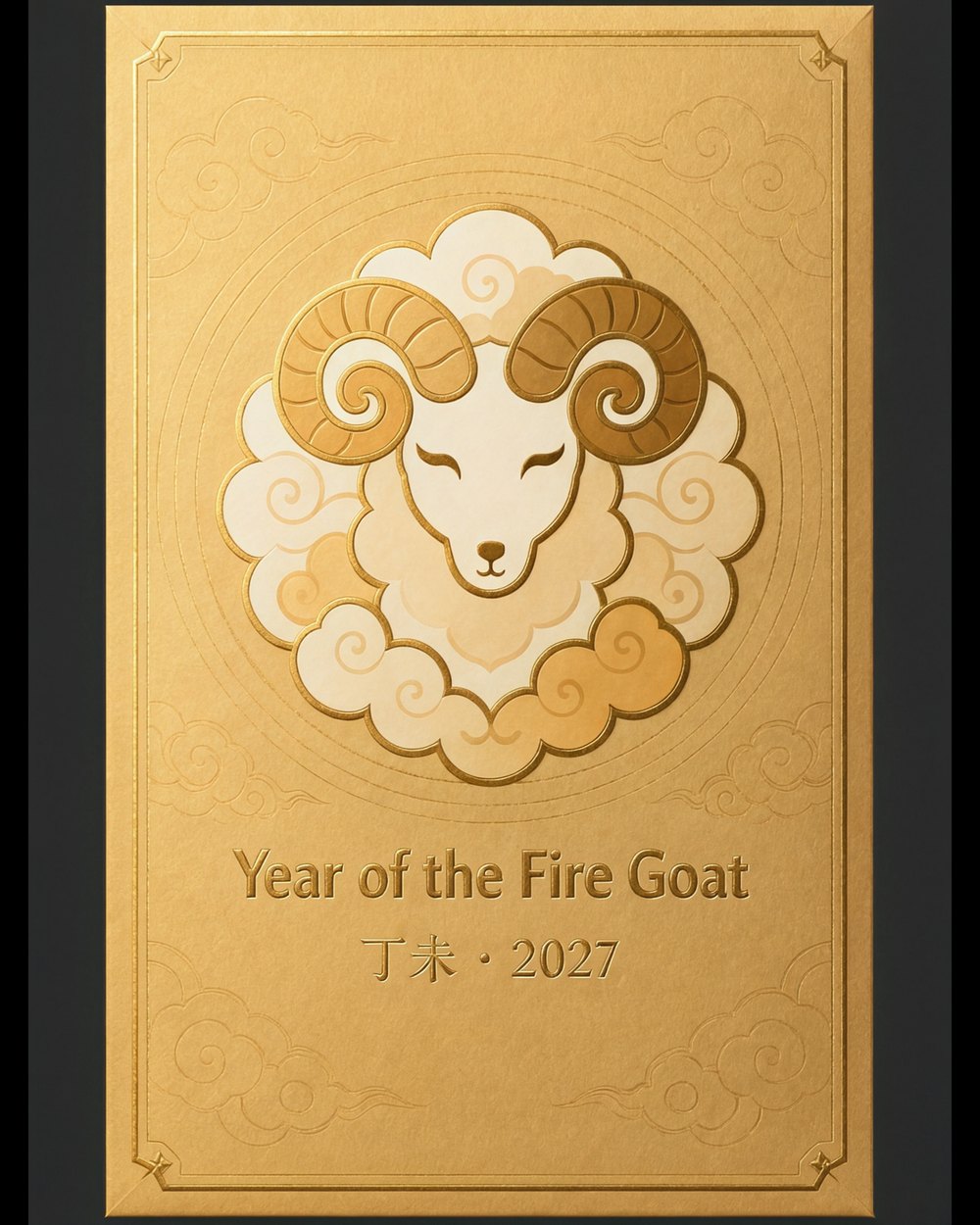
The red envelope is the one object that almost every visitor holds. Mandarin speakers call it hóngbāo 红包. Hokkien speakers say ang pow, and Cantonese speakers say lai see. The packet looks like a folded card. It works as a present, a blessing and a small promise of goodwill at the same time.
If a Chinese, Singaporean, Malaysian or Vietnamese household invites you in during the festival, you will probably receive one. You will probably need to give one too. This guide covers the paper envelope and the digital packet. It explains what is inside, who gives one, how much money is normal, and which details separate a polite gesture from an awkward one.
What a red envelope is
A red envelope is a small paper packet that holds banknotes. It usually has gold foil decoration. The red color is not decoration. Red is the color of protection and good fortune. People understand that the packet carries a blessing from the giver to the receiver for the coming year. The money is rarely the important part. In most families the amount is modest. The meaning is the transfer of good luck from an older person to a younger one.
So you give the packet with a short greeting, not with a thank-you. You do not pay the person. You wish them a good year in a form that they can keep. For the standard phrases that go with the exchange, see Chinese New Year greetings.
Who gives, and who receives
- Elders give to children. Parents, grandparents, aunts and uncles give to children and to younger relatives who are not married. This is the center of the custom.
- Married adults give to unmarried relatives. In many families, marriage turns a receiver into a giver. Age does not.
- Employers give to employees. A company red envelope is common in mainland China. Companies sometimes hand it out at a lunch on the first day back at work.
- Hosts give to guests. If you visit a home during the festival, the host will probably give you one. A direct refusal is considered unlucky, so accept the envelope with both hands.
How much money to put in
There is no national number, but there is a widely shared set of rules. People choose an amount for how it sounds, not for what it buys. The same amount can be right for a niece and wrong for a colleague. As a rough guide, one clean note is normal for a visitor who gives to the child of a friend. Close family usually receives several notes.
| Amount pattern | Why people use it | Common setting |
|---|---|---|
| Even numbers, especially 8 | 8 (bā) sounds like 发 (fā), to prosper | The usual choice for most packets |
| 6 or 66 | 6 (liù) sounds like 顺 (shùn), smooth | A wish for an easy year, good for colleagues |
| 9 or 99 | 9 (jiǔ) sounds like 久 (jiǔ), long-lasting | Elders, and relationships of long standing |
| 100, 200, 500, 800, 1000 | Round, generous, easy to give in clean notes | Close family. The amount is larger in cities than in small towns |
Two practical rules are the same in every region. Do not give a torn or creased note. Do not give coins, because the packet must feel sealed and finished. If you give packets to several children in one family, give the same amount to each child, because children compare.
Red envelope design and what the paper says
Families and brands put most of their effort into the design of the envelope. A traditional packet has gold characters for fortune and a repeating pattern of clouds or coins. Its flap tucks in and does not glue shut, so the packet can open again next year. Modern packets come in matte paper, letterpress, laser-cut lattices, cloth purses with a drawstring, and folded origami shapes.
- You will see these characters. 福 (fú) means fortune, and 春 (chūn) means spring. Other common lines are 恭喜发财 (gōngxǐ fācái) and 万事如意 (wànshì rúyì). Many packets also show the animal of the year.
- The motifs are clouds (祥云), coins, fish, peonies and the zodiac animal of the year. Gold on red is the usual choice. More restrained designs use ink black and gold.
- The flap is important. A tuck-in flap is traditional and reusable. A glued flap looks like a commercial packet.
- Sizes are different. A standard packet fits a folded banknote. A long narrow packet holds one note without a fold, and some elders prefer it.
If you make your own envelope, use only red, gold and cream. Choose one motif, not three. Put the greeting on the back so that the front stays simple. A packet with one gold 福 and a clean fold looks more careful than a packet covered with symbols. The same restraint applies to the cards that often go with the envelopes.
Digital red packets
The red envelope has had a digital form inside WeChat since 2014. Later versions came to Alipay and other apps. You send a digital packet in a group chat or to one person. The receiver taps the packet to open it, and the money goes into a wallet. A group packet splits a total amount at random. This turned giving money into a game, and it let the custom cross distance.
Two details surprise visitors. One WeChat packet has a limit of 200 yuan, so people split a large amount across several packets or send a transfer instead. The message field also matters more than it does in a paper packet. A paper packet carries tone in handwriting and in paper. A digital packet has neither. A short line of greeting is what makes a digital packet feel real.
| Form | Feel | Best for |
|---|---|---|
| Paper packet, handed over | Formal, personal, a keepsake | Family, children, a visit to a home |
| Paper packet, sent by post | Warm but slow | Relatives you cannot visit |
| Digital packet, one to one | Practical, immediate | Friends abroad, colleagues |
| Digital group packet | Playful, public | Team chats, groups of friends |
Five mistakes to avoid
- Do not put 4 or an odd amount inside, however generous the sum is.
- Do not use a white or plain envelope, because white is the color of funerals in Chinese culture.
- Do not hand it over with one hand while you look away. The polite form uses both hands and eye contact.
- Do not open a packet that someone gives you in front of the giver.
- Do not give a packet to an elder as if you were paying them. You give a present to an elder, not an envelope, unless the family treats you as a junior member.
How much money does a foreign visitor put in a red envelope?
For the child of a friend, one clean note in the local currency is enough. The gesture matters more than the sum. For close family, follow what the household gives to you. Avoid 4 and odd numbers.
Can I give a red envelope to an adult?
Yes. You can give one to younger relatives who are not married, and to colleagues at work. A wrapped present is usually a better form for an elder. See Chinese New Year gifts.
Do I need to write anything on the envelope?
A short greeting on the back is enough. Use 新年快乐 (xīnnián kuàilè) or 恭喜发财 (gōngxǐ fācái). Do not write the amount.
Is a red envelope the same as a red packet?
Yes. Red envelope, red packet and hongbao all name the same object. Ang pow is the Hokkien name, and lai see is the Cantonese name.